Bitchat: Jack Dorsey’s Latest Venture and Its Implications for Bitcoin
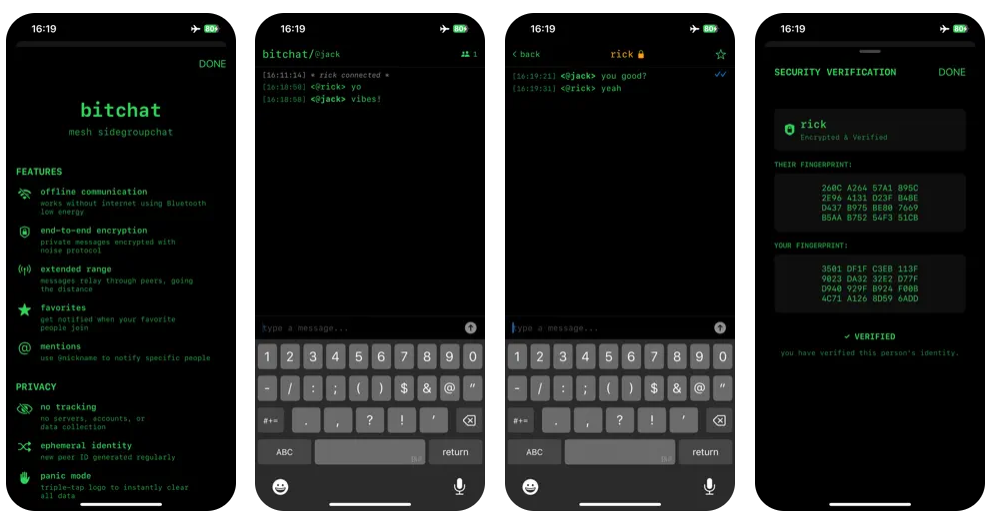
Jack Dorsey, the tech visionary behind Twitter (now X) and Block, has once again stirred the waters of innovation with his latest project, Bitchat.
Launched in beta in July 2025, this decentralized messaging app operates entirely over Bluetooth Low Energy (BLE) mesh networks, enabling secure, internet-free communication and, notably, the ability to relay Bitcoin transactions offline.
For Bitcoiners, privacy advocates, and those skeptical of centralized systems, Bitchat represents a bold step toward censorship-resistant communication and financial sovereignty.
But what exactly is Bitchat, and what does it mean for Bitcoin’s future?
What is Bitchat?
Bitchat is a peer-to-peer messaging platform that doesn’t rely on the internet, central servers, or user accounts.
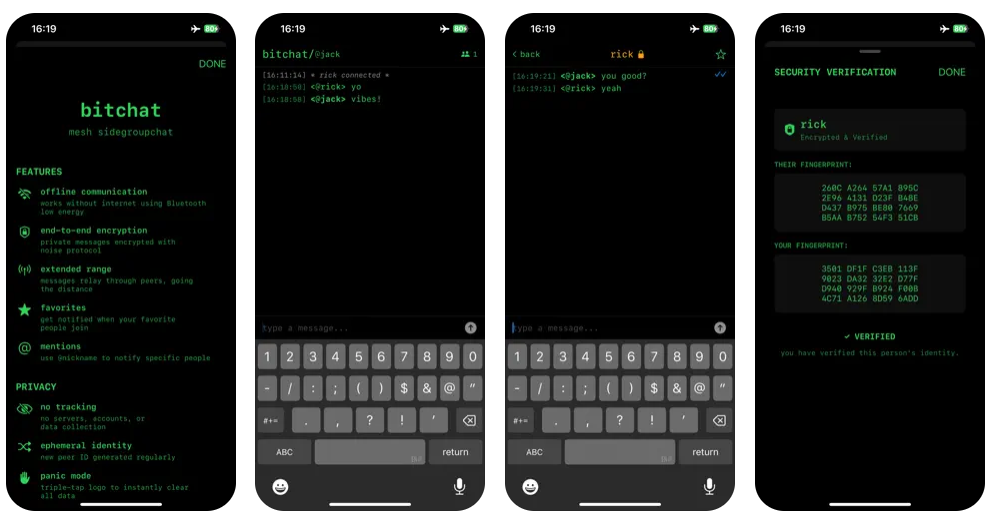
Instead, it uses Bluetooth mesh networks to create a decentralized communication layer where devices act as both clients and servers, relaying messages hop-by-hop to extend beyond Bluetooth’s typical 30-100 meter range, potentially up to 300 meters or more.
Messages are end-to-end encrypted, stored only in device memory, and deleted after forwarding, emphasizing privacy and ephemerality.
The app’s design draws inspiration from early internet chat protocols like IRC, with a modern twist: it supports offline Bitcoin transaction relays, a feature that could redefine how we think about digital money in disconnected environments.
Dorsey unveiled Bitchat as a “weekend project” coded with the help of Goose, an open-source AI coding assistant developed by Block.

Initially released via Apple’s TestFlight, the beta filled its 10,000-user cap within hours, signaling strong interest.
By July 28, 2025, Bitchat officially launched on the Apple App Store, with an unofficial Android version circulating via GitHub.
The app’s privacy-first design includes features like random peer IDs per session, an emergency data wipe with a triple-tap, and dummy messages to obscure user activity, making it a compelling tool for scenarios like protests, disaster zones, or areas with unreliable internet.
Bitchat and Bitcoin: A paradigm shift?
While Bitchat is primarily a messaging app, its integration with Bitcoin, specifically through the ability to relay pre-signed Bitcoin transactions offline, has sparked excitement in the Bitcoin community.
Here’s why this matters:
1. Offline Bitcoin Transactions
Bitchat enables users to transmit pre-signed Bitcoin transactions (or ecash via integrated Cashu wallets) over Bluetooth mesh networks.
This means you can send Bitcoin to someone nearby without an internet connection, with transactions relayed through other devices until they reach an online node to be broadcast to the Bitcoin blockchain.
In a world where internet access can be disrupted by natural disasters, censorship, or infrastructure failures, this feature makes Bitcoin more resilient and usable in edge cases.
Imagine paying for goods at a market during a power outage or transferring value in a warzone, Bitchat could make this possible.
2. Alignment with Bitcoin’s Ethos
Dorsey has long championed Bitcoin as a decentralized, censorship-resistant alternative to traditional finance. Bitchat mirrors this ethos by removing reliance on centralized communication infrastructure.
Just as Bitcoin eliminates middlemen like banks, Bitchat bypasses internet service providers and cloud servers, creating a parallel system for both communication and value transfer.
The app’s use of Nostr protocol integration and potential Lightning Network compatibility further ties it to Bitcoin’s ecosystem, enabling features like tipping with satoshis (fractions of Bitcoin) directly within chats.
3. Privacy and Censorship Resistance
Bitcoin’s promise of financial freedom hinges on privacy and resistance to control. Bitchat enhances this by offering a communication platform that’s difficult for authorities to monitor or shut down.
During pro-democracy protests in Hong Kong, apps like Bridgefy (a similar Bluetooth-based messenger) were used to evade surveillance.
Bitchat takes this further with end-to-end encryption and no persistent identifiers, ensuring users can communicate and transact without leaving a digital footprint.
For Bitcoin users, this could mean safer coordination of transactions in hostile environments.
4. Pushing Mainstream Adoption
By integrating Bitcoin functionality into a mobile app that runs on standard smartphones, Bitchat lowers the technical barrier for using cryptocurrency in unconventional settings.
Unlike earlier offline transaction experiments (like goTenna or LochaMesh), Bitchat leverages Dorsey’s credibility and visibility to bring the concept to a wider audience.
If successful, it could inspire mainstream wallets and apps to adopt offline-capable designs, making Bitcoin more practical for everyday use.
Challenges and Caveats
Despite its potential, Bitchat isn’t without hurdles.
Early security concerns raised by researchers like Alex Radocea highlighted flaws in its identity authentication system, which could allow impersonation.
Dorsey acknowledged these issues, adding a GitHub disclaimer that Bitchat hasn’t undergone external security review and isn’t ready for production use.
This is a critical point for Bitcoin users: while the app’s offline relay system is innovative, it doesn’t sign transactions itself, and final confirmation still requires an internet-connected node.
In low-density areas, message and transaction relays may fail if there aren’t enough nearby users, limiting reliability.
Additionally, Bitchat’s Bitcoin functionality is currently limited to small data payloads due to Bluetooth’s bandwidth constraints.
Large transactions or complex smart contracts may not be feasible, and the app’s effectiveness depends on user adoption to form robust mesh networks.
There’s also the question of regulatory scrutiny: encrypted, internet-free apps that facilitate Bitcoin transfers could attract attention from governments concerned about illicit activity, as seen with debates over encrypted messaging platforms.
What It Means for Bitcoin’s Future
Bitchat is more than a niche messaging app, it’s a proof-of-concept for a world where communication and financial systems operate independently of centralized control.
For Bitcoin, it represents a step toward true decentralization, where even internet outages can’t disrupt the ability to transact.
This aligns with Satoshi Nakamoto’s vision of a peer-to-peer electronic cash system that empowers users, not institutions.
However, Bitchat’s impact depends on its ability to scale and address security concerns.
If Dorsey’s team can refine the app, integrate WiFi Direct for greater range (as hinted in the whitepaper), and build a robust user base, Bitchat could become a cornerstone of Bitcoin’s infrastructure in challenging environments.
It also signals a broader trend: as centralized platforms face increasing scrutiny over privacy and censorship, decentralized alternatives like Bitchat could drive adoption of Bitcoin.
Final Thoughts
While still in its early stages, it has the potential to make Bitcoin more resilient, accessible, and censorship-resistant by enabling offline transactions and secure communication.
For Bitcoiners, it’s a glimpse of a future where financial sovereignty doesn’t depend on fragile infrastructure.
For the rest of us, it’s a reminder that innovation often comes from questioning the status quo.
As Bitchat evolves, keep an eye on its development and maybe download it to test it out yourself.
Whether you’re a Bitcoin believer or just curious about the future of decentralized tech, Bitchat is worth watching.
What do you think?
Could this be the spark that takes Bitcoin to the next level?
ON BITCOIN is a reader-supported publication. To receive new posts and support my work, consider becoming a free or paid subscriber.

Comments ()