Buy Before the Crowd: How Shortages Really Unfold
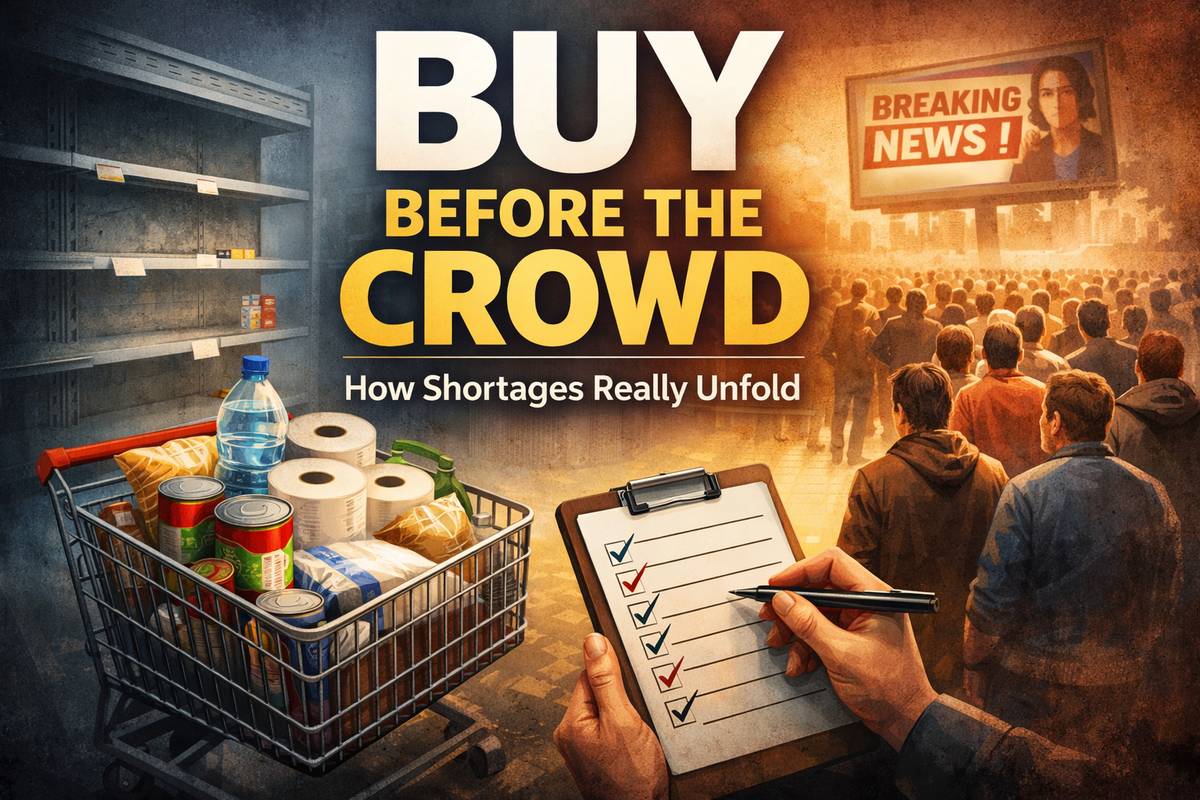
Most people picture shortages like a movie scene.
Empty shelves overnight.
Long lines wrapping around buildings.
News anchors talking about “unprecedented demand.”
It feels sudden. Violent. Obvious.
But that’s not how it usually unfolds.
Real shortages are quieter. Slower. Easy to miss if you’re not paying attention.
They show up in layers.
First, something feels a bit off. Your usual brand isn’t there. You switch without thinking much about it.
Then prices creep up. Not enough to shock you, just enough to notice. You might blame inflation, shrug, move on.
A few weeks later, options get thinner. Shelves aren’t empty, but they’re not full either. You start seeing gaps. Fewer choices. More “out of stock” messages online.
Then comes inconsistency. One store has it, another doesn’t. Delivery times stretch. Limits quietly appear, one or two per customer.
And then one day, it’s just… gone.
Not dramatic. Just absent.
This is how most supply stress actually plays out, whether it’s a natural disaster, a trucking strike, currency issues, or just slow economic breakdown.
It’s not one big break. It’s a series of small fractures.
The people who struggle aren’t usually caught off guard by a single event.
They miss the pattern.
They wait for confirmation. For headlines. For certainty.
By the time it feels “real,” the easy options are already gone. Prices have reset higher. Substitutes are picked over. Convenience disappears.
This isn’t about fear.
It’s about learning to see early signals and acting while things are still normal.
Because normal is when you still have leverage.
Normal is when shelves are full, prices are stable, and nobody else is thinking about it yet.
That’s when preparation is cheap, quiet, and almost boring.
And boring is where the advantage lives.
What follows isn’t speculation or worst-case thinking.
It’s pattern recognition.
These are categories that consistently tighten first when systems get stressed, whether from supply chain disruptions, spikes in demand, loss of trust, or broader economic pressure.
You see it in storms.
In recessions.
In geopolitical tension.
In slow, grinding declines that don’t make headlines until much later.
Different causes. Same behavior.
If you move early, you buy optionality. You get choices, flexibility, and better prices.
If you wait, you’re left with whatever is left, at whatever price is being asked.
Let’s walk through the categories that tend to tighten first.
1. Shelf-Stable Proteins
Calories matter, protein disappears first. I store dry beans, rice and lentils by the pound.

Why it tightens
People instinctively reach for filling foods that feel substantial.
Protein checks that box and it’s on of the first thing to go at the grocery store.
What to store
Canned meat, beans, lentils, powdered eggs, peanut butter, protein powder.
Smart move
Diversity matters more than volume.
A mix keeps morale up and reduces reliance on one supply.
2. Water Storage, Not Just Filters
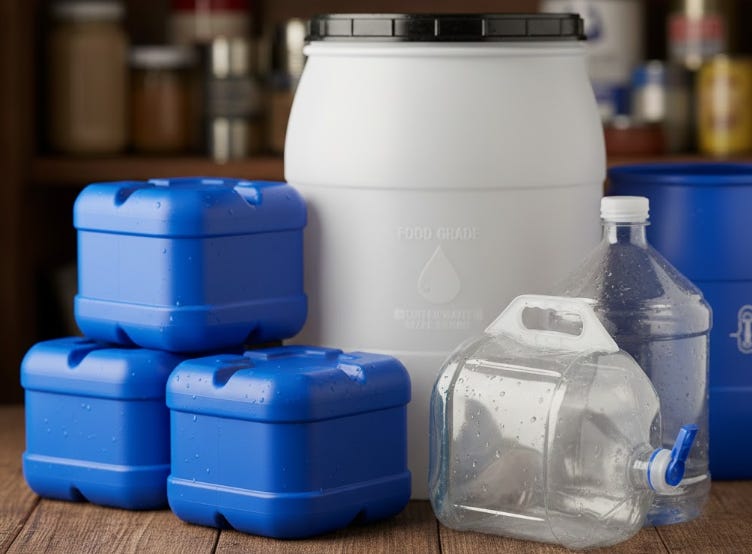
Filters sell out. Containers vanish faster.
Why it tightens
People realize too late that filtering water still requires something to hold it.
What to store
Stackable water containers, collapsible jugs, food-grade barrels.
Smart move
Store water and filtration. One without the other is incomplete.
3. Over-the-Counter Medications
Pain, fever, sleep, digestion.
Why it tightens
Hospitals overload. Pharmacies get stripped in days.
What to store
Pain relievers, allergy meds, cold and flu basics, anti-diarrheals, electrolyte powders.
Smart move
Rotate yearly. Treat meds like food, not like a one-time buy.
4. Light Sources That Don’t Need Power
Batteries are obvious.
Light itself is often overlooked. When the lights go out, people can’t find their lighting tools.

Why it tightens
Darkness changes psychology fast.
What to store
LED lanterns, headlamps, solar lights, candles as last-resort backups.
Smart move
Hands-free light beats flashlights every time.
5. Manual Tools
Anything that replaces electricity becomes valuable.

Why it tightens
When power falters, people rediscover leverage.
What to store
Manual can openers, hand saws, hand drills, sewing kits, basic repair tools.
Smart move
Low-tech tools outlast high-tech ones.
6. Fuel Adjacent Items
Not just fuel itself.
Why it tightens
Fuel shortages ripple outward.
What to store
Fuel stabilizer, lighters, matches, stove adapters, extension hoses.
Smart move
Accessories disappear before fuel does because nobody thinks about them.
7. Hygiene That Preserves Dignity
Cleanliness is not a luxury.
Why it tightens
People underestimate how fast sanitation breaks down.
What to store
Soap bars, wipes, toothpaste, feminine hygiene products, gloves.
Smart move
Hygiene prevents illness, not just discomfort.
8. Cold Weather Insurance
Even in warm climates.
Why it tightens
Power loss turns mild weather into risk.
What to store
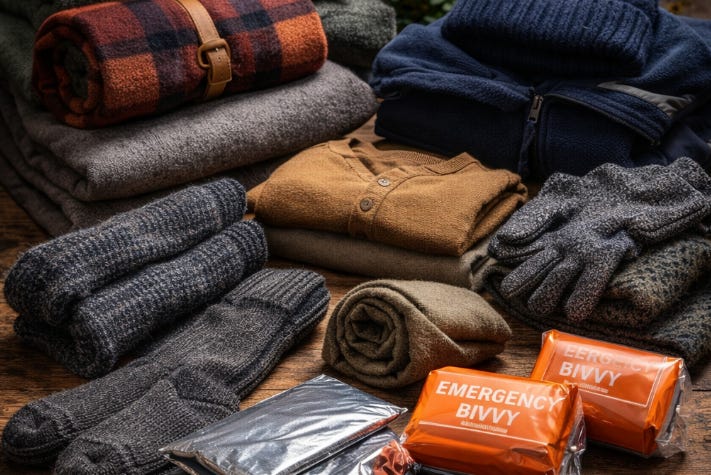
Blankets, wool layers, thermal socks, hats, emergency bivvies.
Smart move
You’re not prepping for average conditions, you’re prepping for worst timing.
9. Information Tools
When networks strain, clarity becomes rare.
Why it tightens
People want updates, guidance, reassurance.
What to store
Battery or hand-crank radios, printed emergency contacts, written plans.
Smart move
Analog information survives digital failure.
10. Small Trade Goods
This is the one most people miss.
Why it tightens
When money stalls, exchange doesn’t.
What to store
Batteries, lighters, hygiene items, instant coffee, spare chargers.
Smart move
Utility plus familiarity creates value.
The Real Lesson
Preparedness isn’t about hoarding.
It’s about staying ahead of the curve.
By the time something feels urgent, it’s already scarce.
The advantage always belongs to the quiet early movers who bought calmly, stored intentionally, and never rushed.
You don’t need everything at once.
Add one item per week. One improvement per month. One layer of redundancy per season.
That’s how resilience is built, slowly, deliberately, without panic.
What category do you think people underestimate the most?
Reply and tell me below.

Comments ()