Could You Last a Week Without Power? A Realistic Self-Reliance Test
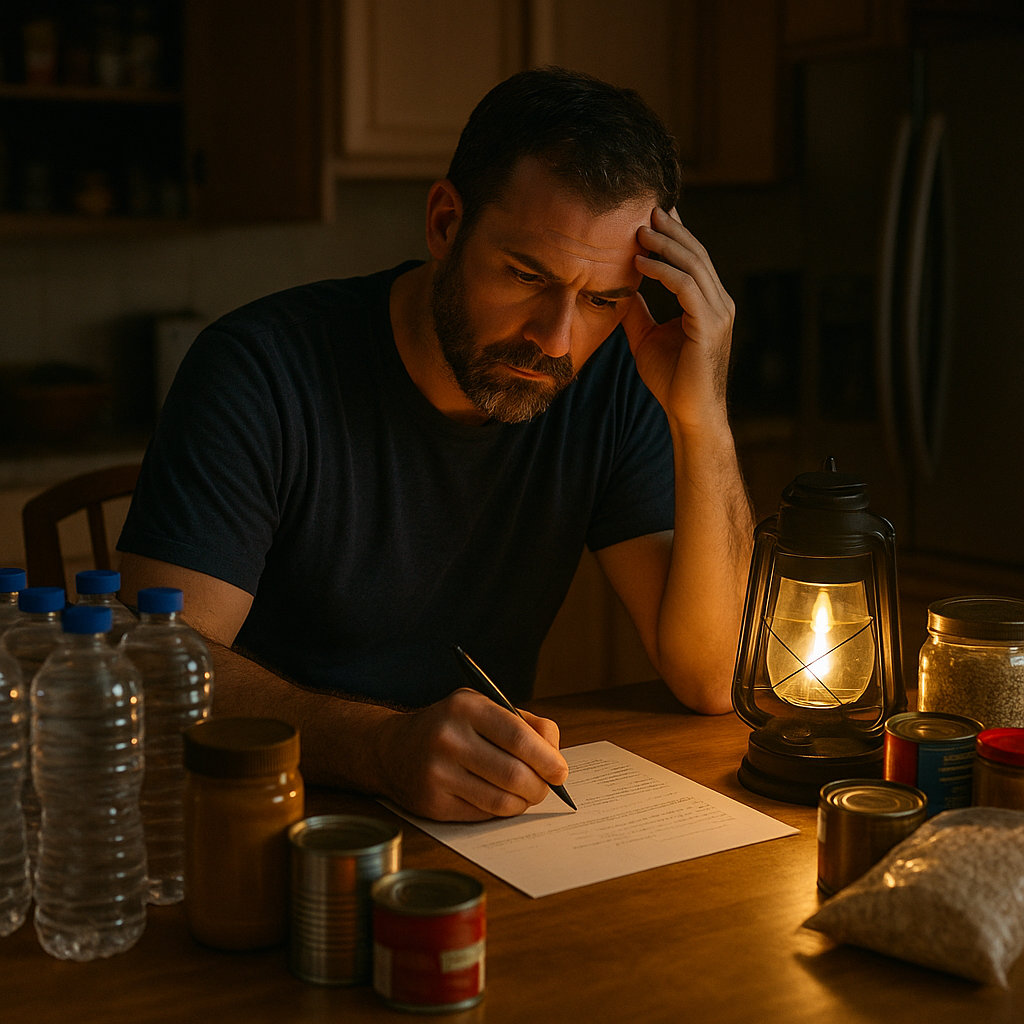
If the lights went out tonight and didn’t come back on for days — no grocery runs, no tap water, no deliveries — how long could you really make it on what’s already in your house?
Not what you plan to buy.
Not what’s on your Amazon wish list.
What’s here. Right now.
This isn’t a doomsday scenario — it’s a wake-up call for anyone who values independence and resilience. Modern life has made survival seem automatic, but the truth is most people would run out of essentials in less than a week.
Let’s find out where you actually stand.
1. Food: Counting What Really Counts
Start with calories — they’re your baseline energy currency.
A healthy adult burns around 2,000 calories per day just to stay functional. Stress, cold weather, or physical labor can easily double that.
Take 10 minutes and look through your cupboards and freezer. Skip the fresh stuff that’ll spoil when the fridge dies — focus on what lasts: rice, beans, oats, canned soup, pasta, peanut butter, oils, and protein sources like tuna or lentils.
👉 Quick math:
Total calories on hand ÷ calories your household needs per day = your food window.
Most people are shocked when they see the number.
2. Water: The Real Non-Negotiable
You can go weeks without food, but only a few days without water.
That’s why water — not weapons, not gear — is your first true survival line.
You’ll need at least one gallon per person, per day for drinking, cooking, and minimal hygiene.
Check what you have stored — bottled water, jugs, maybe even your water heater tank (a 40-gallon heater could sustain a family for days).
If that’s all you’ve got, great — but can you make more?
✅ Do you have a way to filter or boil water if the taps stop running?
✅ Can you collect rainwater safely?
Your answers determine your water window.
3. Power and Light: Keeping the Darkness at Bay
Once the sun sets, morale often drops faster than the temperature.
Flashlights, lanterns, headlamps, and candles all matter — but batteries die, and fuel runs out. A small solar charger or power bank can keep radios, phones, and emergency lighting alive far longer than you’d expect.
If you rely on medication, refrigeration, or electronics, backup power isn’t a luxury — it’s a necessity.
4. Temperature: Comfort or Crisis
Where you live changes everything.
- Cold climates: You’ll need sleeping bags, thermal blankets, or a safe indoor heat source like propane or wood.
- Hot regions: Shade, airflow, hydration, and cooling cloths become survival tools.
Most people underestimate how fast hypothermia or heat exhaustion can set in indoors when systems fail.
5. Security and Stability
When supplies run short, stress and desperation rise. You don’t need to be paranoid — just prepared.
✅ Check locks and entry points.
✅ Know your neighbors — they can be allies or threats depending on how things unfold.
✅ Keep your tools, food, and water organized so you can secure them quickly if needed.
Preparedness isn’t about fear — it’s about control.
6. Health and Hygiene
A solid first-aid kit is non-negotiable. So are extra doses of essential prescriptions.
Think about what happens if the toilets stop flushing or trash collection halts for weeks.
Do you have gloves, disinfectants, or even a bucket and liners for emergency sanitation?
Illness spreads fastest when hygiene fails — plan for it now, not later.
Putting It All Together
Once you’ve counted your food, water, and essentials, ask yourself:
How long could we last, right now, without leaving home?
If the answer is under a week, don’t panic — that’s your starting point.
Preparedness isn’t built in a day; it’s built in awareness.
The goal isn’t to live in fear — it’s to live with confidence.
The 30-Minute Challenge
Tonight, grab a notebook and walk through your home.
- List what you have for food, water, power, and medical needs.
- Estimate how many days each category would last.
- Identify your weakest link — then fix that first.
Even one new water jug or bag of rice doubles your margin. That’s how self-reliance grows: one small step at a time.
Download: “The Survival Self-Test”
Use this free worksheet to calculate your survival window — how long your home could sustain you if the grid went down tonight.
Click to download PDF file.

Comments ()