Matrix: The Open Protocol Powering Secure, Decentralized Communication

In an era where centralized messaging platforms like WhatsApp, Slack, and Discord dominate, Matrix emerges as a refreshing alternative.
Built as an open-source protocol for secure, decentralized, and interoperable communication, Matrix is redefining how we connect online.
Whether you’re an individual seeking privacy, a community craving control, or an organization needing secure collaboration, Matrix offers a powerful solution.
In this post, we’ll explore what Matrix is, how it works, and why it’s a vital tool for the future of communication.
Thanks for reading ON SURVIVAL! Subscribe for free to receive new posts and support my work.
What Is Matrix?
Matrix, created by the non-profit Matrix.org Foundation, is an open standard for real-time communication.

It enables instant messaging, voice and video calls, and even data sharing (like IoT applications) across a decentralized network.
Unlike proprietary apps that lock you into their ecosystem, Matrix operates like email for modern communication: you can use any Matrix-compatible app (called a client) to connect with users on any Matrix server (called a homeserver), no matter who runs it.
Launched in 2014 by Matthew Hodgson and Amandine Le Pape, Matrix has grown into a global network with over 115 million users and thousands of servers worldwide.

It powers communication for diverse groups, from Germany’s healthcare system and the Bundeswehr to Mozilla and open-source communities.
Its open-source nature and focus on privacy make it a beacon for those wary of Big Tech’s walled gardens.
How Does Matrix Work?
Matrix’s magic lies in its federated, decentralized architecture. Instead of relying on a single company’s servers, it operates as a network of independent servers that sync seamlessly.
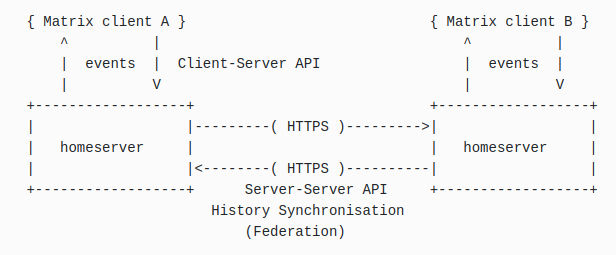
Here’s a simplified look at how it functions:
Homeservers and Federation:
Every user has an account on a homeserver, which stores their messages, chat history, and account data.
You can join a public homeserver (like matrix.org) or host your own for full control.
Homeservers communicate via federation, sharing data in real time. If you’re in a chat room with users on different homeservers, the servers sync the conversation, ensuring no single server owns the chat.
This eliminates central points of failure and censorship.
Rooms and Events:
Communication happens in rooms, which function like group chats or channels. Rooms can be public, private, or invite-only, and they support text, files, voice, video, and more.
Everything in Matrix is an event—a message, emoji reaction, or call. Events are stored as JSON objects, cryptographically signed for security, and form a persistent, searchable conversation history.
Clients and Bridges:
Users access Matrix through clients, such as Element (the flagship app), NeoChat, or FluffyChat, available on desktop, mobile, or web.
Matrix supports bridges, which connect it to other platforms like Slack, Discord, Telegram, or even WhatsApp. This lets you manage all your chats from a single Matrix client, breaking down silos between apps.
End-to-End Encryption (E2EE):
Security is baked into Matrix. It uses Olm and Megolm cryptographic protocols (inspired by Signal) for E2EE, ensuring only intended recipients can read messages.
Features like cross-signing verify devices, preventing unauthorized access. Matrix’s encryption is battle-tested, making it a go-to for sensitive communications.
Why Is Matrix Useful?
Matrix isn’t just another chat app—it’s a paradigm shift. Here’s why it’s worth embracing:
Decentralization and Control:
With Matrix, you’re not at the mercy of a single company. Run your own homeserver to control your data, or choose a trusted provider. This decentralization protects against censorship, outages, and corporate overreach.
For organizations, self-hosting ensures compliance with data privacy laws (e.g., GDPR) and keeps sensitive communications in-house.
Interoperability:
Matrix’s bridges let you unify your communication. Imagine managing Slack, Telegram, and WhatsApp chats from one app. This is a boon for teams juggling multiple platforms or individuals tired of app-switching.
Developers can build custom integrations, making Matrix a flexible backbone for apps beyond messaging, like IoT or collaborative tools.
Privacy and Security:
E2EE ensures your conversations stay private, even from homeserver admins. This is critical for activists, journalists, or anyone prioritizing confidentiality.
Open-source code means Matrix is transparent and community-vetted, reducing the risk of hidden backdoors.
Scalability and Versatility:
Matrix scales from personal chats to massive communities. Public rooms host thousands of users, while private rooms secure small teams.
Its use cases extend beyond messaging. For example, Germany’s healthcare system uses Matrix to share medical data securely, and IoT devices can leverage it for real-time updates.
Community-Driven and Future-Proof:
As an open standard, Matrix isn’t beholden to a single company’s whims. The Matrix.org Foundation ensures it evolves with community input.
New features, like faster room joins and encrypted voice calls, are in active development, keeping Matrix competitive.
Real-World Impact
Matrix is already making waves:
Germany’s Healthcare System: Uses Matrix to securely share patient data across hospitals, complying with strict privacy laws.
Bundeswehr: Relies on Matrix for encrypted military communications.
Mozilla: Runs community chats on Matrix, fostering open collaboration.
Open-Source Communities: Projects like KDE and GNOME use Matrix for developer coordination.
For individuals, Matrix offers a private alternative to apps like WhatsApp. For businesses, it’s a secure, customizable platform. For developers, it’s a playground for building innovative tools.
Getting Started with Matrix
Ready to try Matrix?
Here’s how:
Choose a Client: Download Element (element.io) or another client from matrix.org/clients.
Pick a Homeserver: Sign up on matrix.org or a community-run server, or host your own (check matrix.org for setup guides).
Join Rooms: Explore public rooms via a directory or create your own.
Bridge Other Apps: Connect Slack, Telegram, or others using bridges (available on many homeservers).
Why Matrix Matters
In a digital age where privacy is eroded and tech giants gatekeep communication, Matrix stands out as a beacon of freedom.
It empowers users with choice, security, and interoperability, all while remaining open and community-driven.
Whether you’re a privacy advocate, a developer, or just tired of fragmented chat apps, Matrix offers a compelling vision: a world where communication is secure, decentralized, and yours to control.
Give Matrix a spin, and join the movement to reclaim the internet—one encrypted message at a time.
Want to dive deeper?
Visit matrix.org or join the conversation in a Matrix room!
Thanks for reading ON SURVIVAL! Subscribe for free to receive new posts and support my work.



Comments ()