The Transformer Robot That Launches a Shapeshifting Drone Off Its Back
A new leap in multimodal robotics
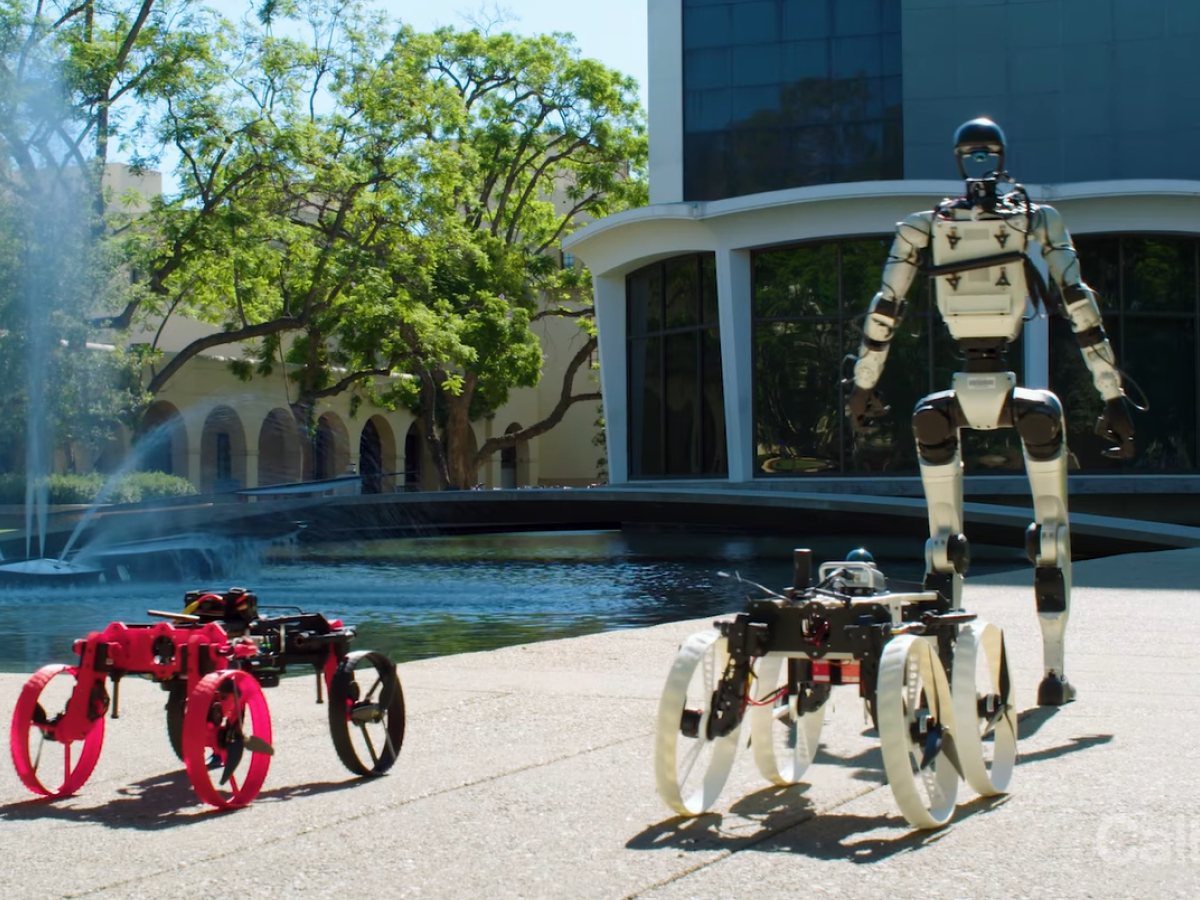
Researchers at Caltech and the Technology Innovation Institute have revealed a prototype that feels like it was pulled straight out of a cyberpunk novel.
It is a humanoid robot paired with a shapeshifting drone called M4, and together they form one of the most impressive multimodal robotic systems ever demonstrated.
The key idea is simple to describe but extremely difficult to engineer. A humanoid robot carries a drone on its back. The drone can drive across the ground, balance on two wheels, stand upright, reshape itself, and then lift off into the air. Each mode works on its own, yet the system is designed so the two machines can operate as a coordinated team.
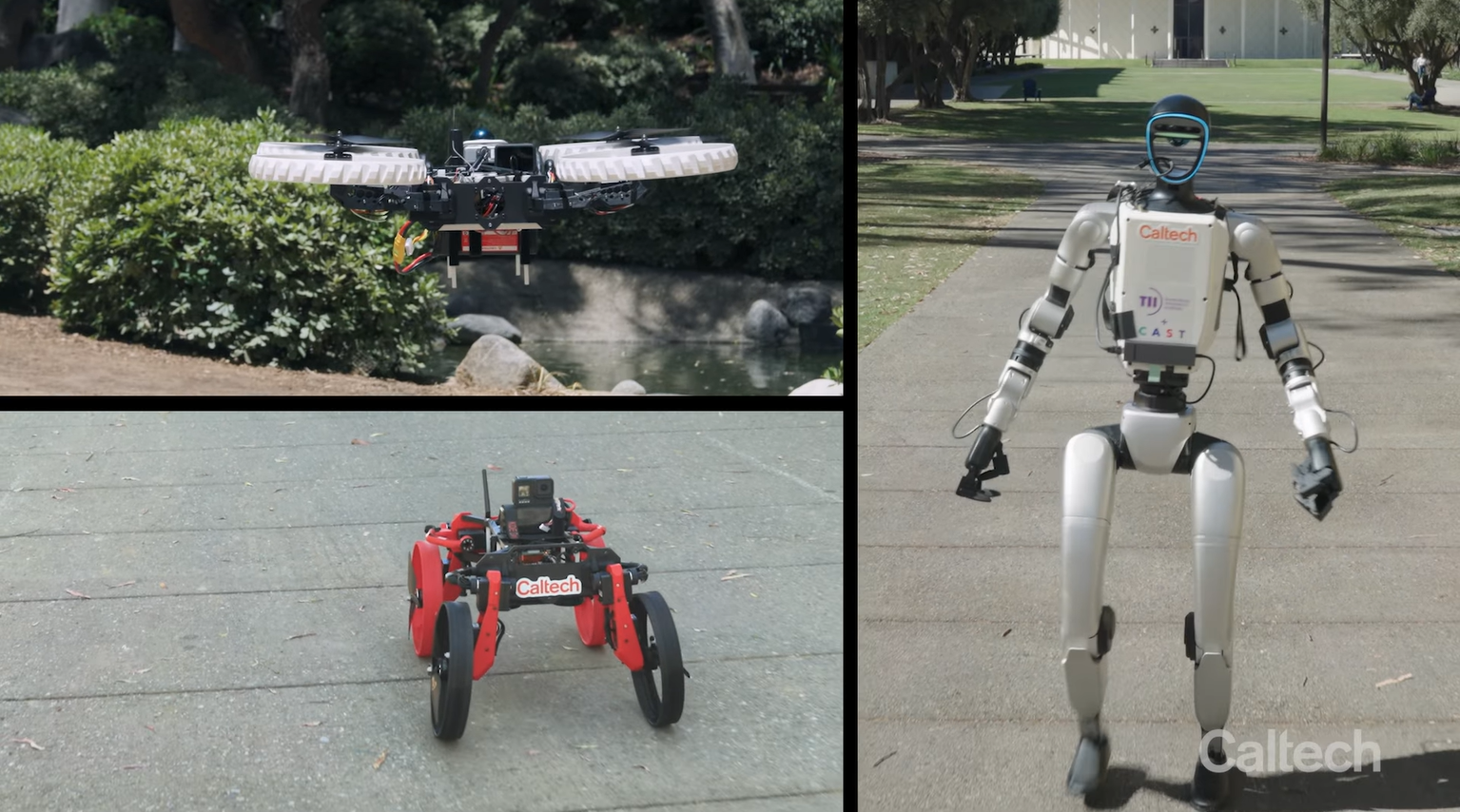
This is not a toy. It is research aimed at solving real world mobility and autonomy challenges.
What makes this system different
A humanoid base for real-world mobility
The researchers used a variant of the Unitree G1 humanoid as the carrier platform. It can climb stairs, move through buildings, and navigate areas that wheeled robots struggle with. Its job is to reach places where terrain is unpredictable and provide a mobile launch pad for the drone.
The M4 drone is the real breakthrough
The drone is a multimodal vehicle that can take several forms.
It can:
- Drive like a rover
- Balance on two wheels
- Use its wheels as walking feet
- Roll downhill with passive motion
- Use rotor assist to climb slopes
- Transform into a quadcopter and lift into the air
This gives the drone an extremely wide operational envelope. It can handle stairs, rocky surfaces, flat ground, open air, and even tight spaces.
Designed for autonomy and safety
The research team stresses that future robots must be safe around people.
Their goal is to create systems that operate with reliable autonomy, controlled motion, stable balance, and predictable behavior.
The humanoid and drone demonstrate how multiple modes can work together without losing safety or stability.
Why this matters for the future of robotics
Most robots today are single mode.
They walk, or they fly, or they roll. When a machine can only move one way, it is limited by the environment it enters.
A flying drone cannot navigate a stairwell. A ground robot cannot cross a river or climb over debris.
A multimodal robot breaks that limitation.
This research shows a future where one system can choose the movement style that best fits the terrain. It can scout, inspect, deliver payloads, or enter areas that are too dangerous for humans.
The drone can perform aerial mapping, then land, convert into a wheeled vehicle, travel through a doorway, and reposition. The humanoid can carry tools, sensors, or extra drones and act as a mobile command unit.
This is the same type of robotics that rescue teams, wildfire responders, and exploration missions will rely on in the near future.
Here is what this breakthrough signals
1. Robotics is entering a convergence phase
Machines are no longer locked into one role.
They are becoming modular and flexible, able to adapt to the scenario at hand.
2. Robotics and autonomy will shape emergency response
The ability to search an area, clear obstacles, move through debris, and gain aerial perspective could define the next generation of rescue operations.
3. These systems will appear in civilian spaces sooner than expected
The prototypes we see today will evolve into commercial robots for construction, security patrols, infrastructure inspection, agriculture, and logistics.
4. This is the beginning of hybrid robot ecosystems
Imagine a home server of robots, each with different capabilities, working together. Humanoid for physical tasks.
Drone for scanning and routing. Rover for ground transport. Shared autonomy across platforms.
This humanoid and drone pair is one of the clearest demonstrations of that future.
The bottom line
The Caltech and TII Transformer Robot is not a science fiction concept.
It is a functioning prototype that walks, carries a drone, and launches it into the air in a fully coordinated operation.
It represents a new frontier in robotics: machines that are not limited to one way of moving, but can shift modes and adapt to the world around them.
For anyone following the future of autonomy, off grid resilience, or next generation robotics, this is an important milestone.
The age of multimodal machines has begun, and we are only seeing the first glimpse of what these systems will eventually become.

Comments ()