What Happened in the Last Fourth Turning
The last Fourth Turning unfolded between roughly 1929 and 1946, spanning the Great Depression and World War II.
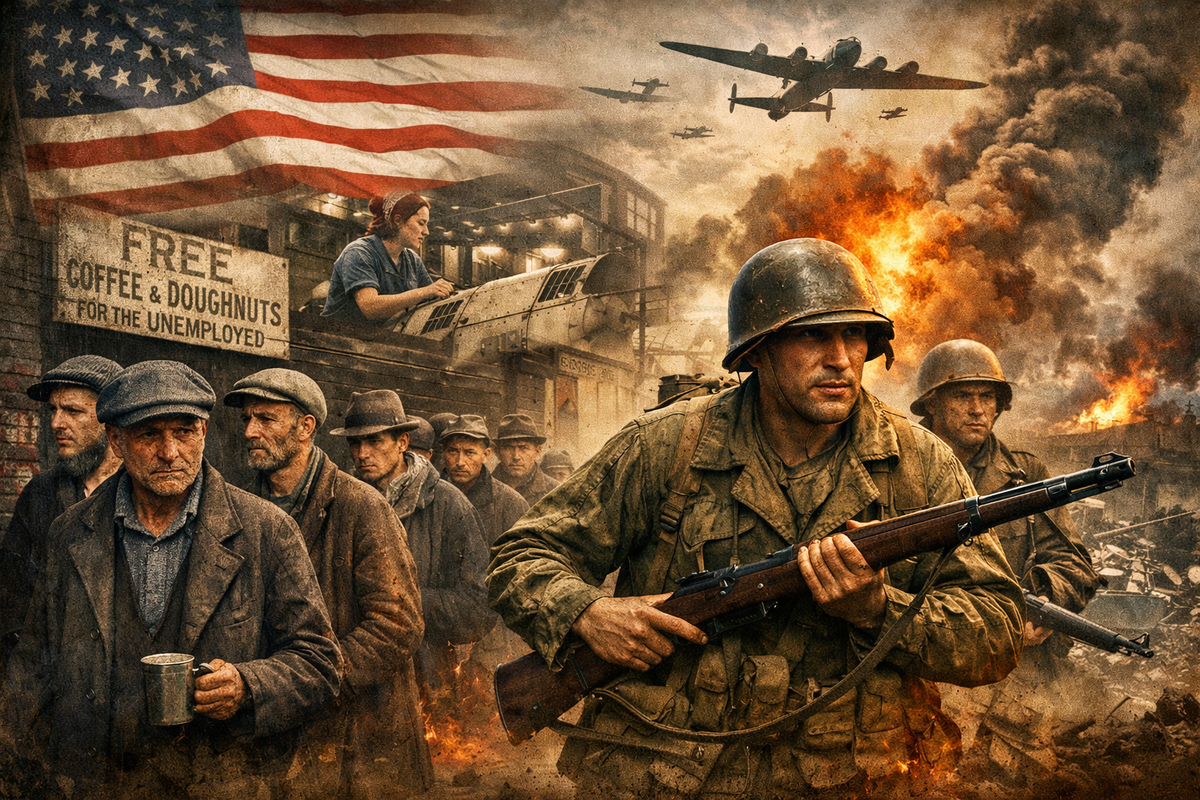
It was not a single event. It was a long compression of failures, shocks, forced adaptations, and hard resets that permanently reshaped institutions, economies, and social expectations.
The concept of the Fourth Turning comes from The Fourth Turning, by William Strauss and Neil Howe.
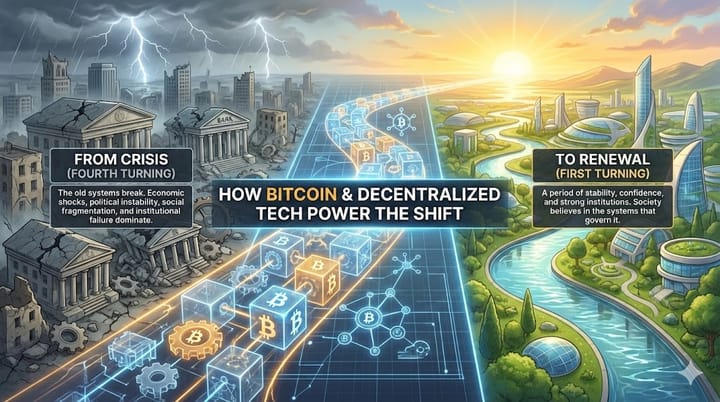
A Fourth Turning is the crisis phase of a historical cycle, when existing systems lose legitimacy and survival becomes the organising principle of society.
Here is what actually happened last time, stripped of nostalgia and mythology.
The System Broke First, Not Society
The crisis began with the 1929 stock market crash, but the deeper failure was systemic.
Banks collapsed.
Savings evaporated.
Credit froze.
Unemployment exploded.
By 1933, roughly one in four American workers was unemployed.
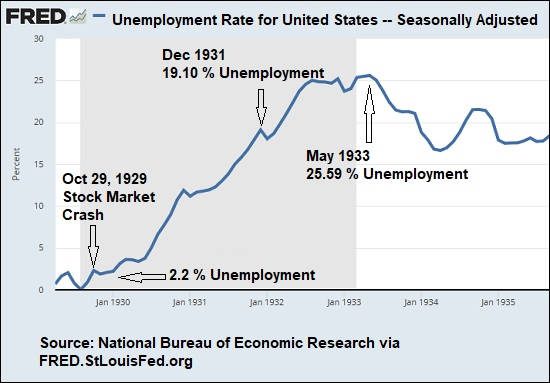
This was not a recession that resolved itself. The old economic order simply stopped functioning.
People quickly learned that institutions they trusted were fragile. Banks closed their doors. Businesses vanished overnight. Government responses were improvised and uneven. Confidence disappeared before stability returned.
This pattern matters, because Fourth Turnings are not triggered by a single catastrophe. They begin when systems no longer perform their core function.
Daily Life Contracted and Hardened
Life during the Great Depression narrowed.
People focused on food, shelter, and survival.
Families doubled up.
Informal economies expanded.
Barter, favors, and community support replaced cash.
Status signalling collapsed. Practical skills mattered more than credentials. People repaired instead of replaced. Waste became immoral.
This was not ideological. It was enforced by scarcity.
The psychological shift was just as important as the economic one. Optimism became cautious. Trust became local. Long-term planning gave way to short-term resilience.
War Did Not Restore Normalcy, It Reorganized Everything
World War II did not end the Fourth Turning. It completed it.
The war demanded total mobilization:
Rationing.
Price controls.
Centralized production.
Forced coordination between government and industry.
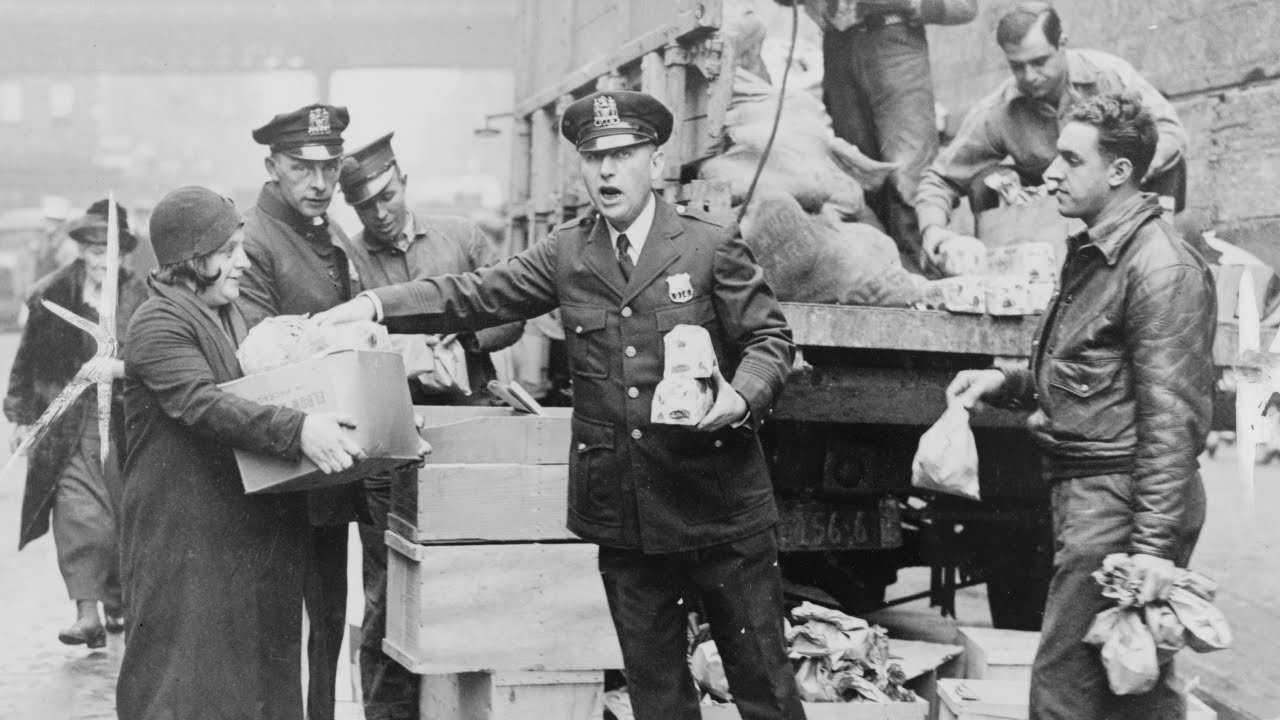
Entire industries were repurposed. Factories that once made cars produced tanks and aircraft. Women entered industrial labor at scale. Citizens accepted surveillance, propaganda, and loss of personal freedoms because survival required it.
This is a key lesson. Fourth Turnings resolve through reorganization, not recovery.
Normal life does not return. A new normal is imposed.
Institutions Were Rebuilt, Not Repaired
After the war, the old order was gone.
The financial system was redesigned.
Global monetary rules were rewritten.
The modern welfare state emerged.
Military and industrial power became permanent fixtures.
The institutions that followed were stronger, more centralized, and more controlling, but also more stable. They were built to prevent the specific failures that caused the crisis.
This is why the post-war period felt orderly and prosperous. It was not accidental. It was engineered in response to collapse.
The Human Cost Was Immense
The last Fourth Turning killed tens of millions globally.
But beyond death counts, it reshaped a generation psychologically.
People who lived through it carried:
- Deep risk aversion.
- Strong distrust of leverage and speculation.
- A preference for stability over innovation.
- A belief in sacrifice and duty.
These traits defined the post-war culture for decades.
The stability of the 1950s and 1960s was purchased with the trauma of the 1930s and 1940s.
The Pattern That Matters Now
The most important takeaway is not the events themselves. It is the sequence.
- Systems failed first.
- Trust collapsed.
- Daily life simplified.
- Power centralized.
- New institutions replaced old ones.
- A new social contract emerged.
Fourth Turnings are not about chaos forever. They are about forced selection. What survives becomes dominant. What fails is discarded without sentimentality.
The last Fourth Turning did not feel heroic while it was happening. It felt exhausting, uncertain, and permanent.
People living through it did not know they were in a historical cycle. They only knew that the rules they grew up with no longer worked.
That recognition always comes too late.
Why This History Matters
Understanding the last Fourth Turning is not about predicting dates or copying outcomes. It is about recognizing conditions.
When systems stop working quietly.
When confidence collapses faster than infrastructure.
When survival replaces growth as the priority.
When rules change without consent.
That is when you know where you are in the cycle.
History does not repeat exactly. But it rhymes closely enough to prepare those who are paying attention.
The last Fourth Turning ended with a rebuilt world.
It began with denial.
Learn about Survival in the Digital Age. Explore self-reliance, resilience, and how you can navigate uncertainty in an increasingly complex world. Survival isn’t hiding. It’s outsmarting the collapse. This is the launch pad!
Comments ()