The Coming Collapse of Trust in Video Evidence
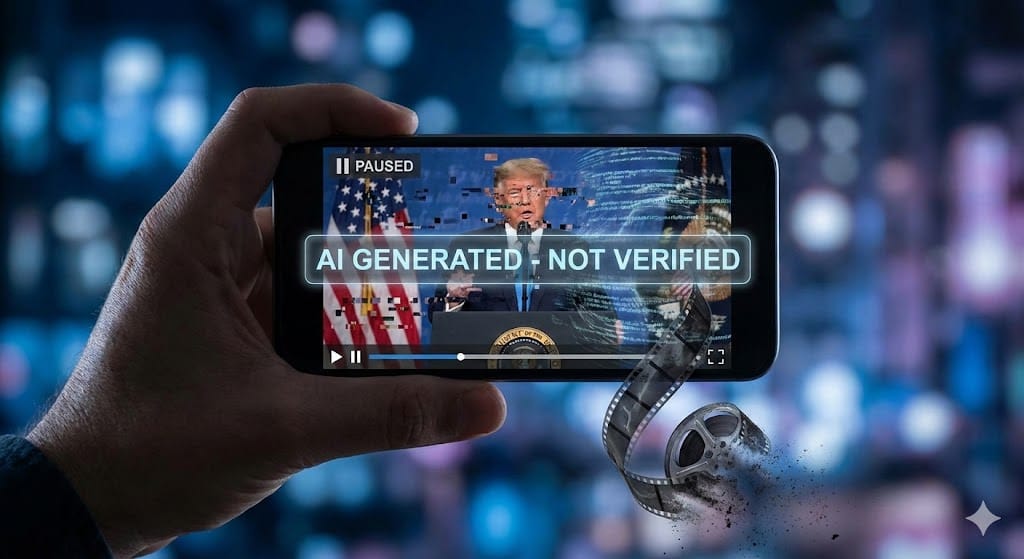
For most of modern history, video has been treated as truth.
A recording meant something happened.
A face on camera meant a real person. A crime caught on film meant case closed.
That era is ending.
We are moving into a world where video evidence no longer proves reality.
It only proves that pixels were arranged convincingly.
Deepfakes Are Just the Beginning
Early deepfakes were crude, glitchy, and easy to spot.
That window is closing fast.
Today we have:
- Hyper realistic face swaps
- Voice cloning that captures tone, pacing, and emotion
- Synthetic body movement that mimics micro gestures
- Real time deepfakes during live video calls
Soon, anyone with moderate resources will be able to fabricate a video of anyone saying or doing almost anything.
Not just public figures, but ordinary people.
At that point, video stops being evidence and becomes allegation.
Feel like the internet knows too much about you?
It does... but it doesn’t have to stay that way.
Digital Disappearance is your survival guide for reclaiming your privacy in a hyper-connected world.
Synthetic People and Infinite Identities
We are also entering the age of synthetic humans.
AI generated people now:
- Have consistent faces across thousands of images
- Age realistically over time
- Maintain memory, personality, and history
- Appear in photos, videos, and livestreams
Some will never have existed as physical humans at all.
This breaks a fundamental assumption in society: that a face corresponds to a person. When that assumption collapses, identity itself becomes probabilistic.
AI Generated Crime Scenes
The legal system is especially exposed.
AI can already generate:
- Photorealistic crime scenes
- Surveillance footage from any angle
- Altered timestamps, lighting, and camera artifacts
- Entire event reconstructions that look authentic
Soon it will be trivial to fabricate evidence that looks better than real footage.
Worse, it will be impossible to prove conclusively that such footage is fake.
This introduces a new legal paradox:
- Guilty parties will claim real evidence is fake
- Innocent parties will be framed with fabricated evidence
- Courts will struggle to establish ground truth
The phrase “the video doesn’t lie” will become meaningless.
The Death of Visual Proof
When everything can be faked, nothing can be trusted by default.
This does not just affect courts.
It affects:
- Journalism
- Insurance claims
- Workplace disputes
- Police body cams
- Citizen recorded incidents
- War reporting
- Historical archives
The collapse of trust in video evidence will create a fog of uncertainty where power flows to whoever controls verification systems.
The Rise of Digital Signatures and Provenance
To survive this shift, society will move from trusting content to trusting origin.
The future will rely on:
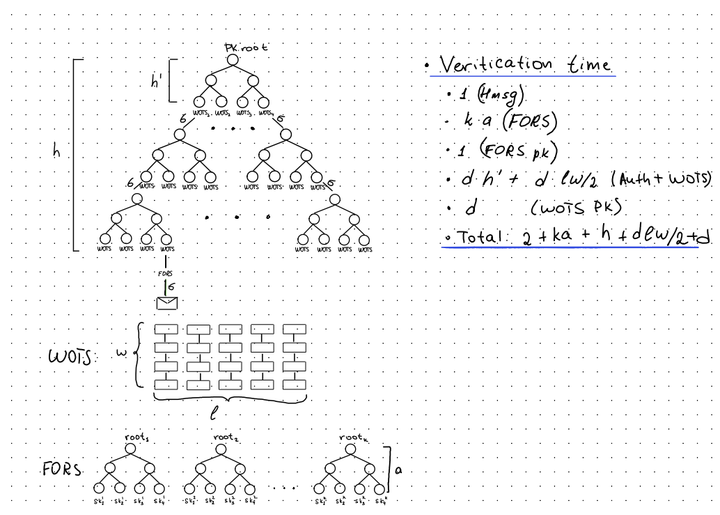
- Cryptographic signatures embedded at capture time
- Hardware level signing in cameras and phones
- Tamper evident metadata chains
- Secure timestamping
- Chain of custody verification
A video will not be trusted because it looks real.
It will be trusted because it can be mathematically proven to have originated from a known device, at a known time, with an unbroken history.
Unsigned video will be treated like anonymous hearsay.
The Power Shift Ahead
This transition raises uncomfortable questions.
Who controls trusted signing infrastructure?
Who decides which devices are valid?
Who gets excluded?
What happens to people without access to approved hardware?
There is a real risk that trust becomes centralized, gated, and weaponized. At the same time, decentralized verification systems could offer an alternative path.
This is not just a technical issue. It is a civilizational one.
What Comes Next
We are heading toward a world where:
- Seeing is no longer believing
- Reality requires verification
- Truth becomes a cryptographic property
- Trust shifts from humans to systems
The collapse of trust in video evidence is not hypothetical. It is already underway.
The only question left is whether we rebuild trust in an open, decentralized way, or allow it to be captured by institutions that decide what is real and what is not.
The camera is no longer a witness.
It is just another mouth that can lie.
Feel like the internet knows too much about you?
It does... but it doesn’t have to stay that way.
Digital Disappearance is your survival guide for reclaiming your privacy in a hyper-connected world.
Comments ()