The Internet Didn’t Get Safer. It Got Smarter.
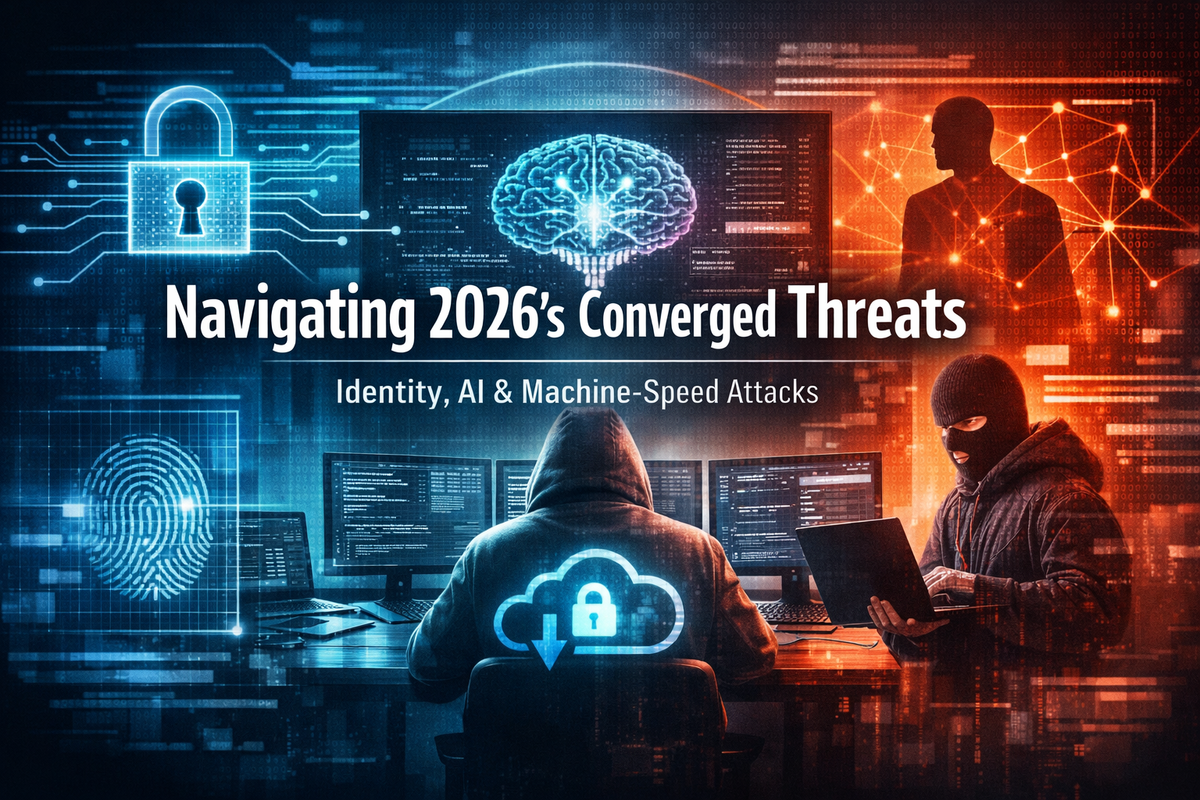
Most people still think of cyberattacks like break-ins.
A hacker finds a vulnerability. Forces their way in. Steals something. Leaves.
That model is dead.
What’s happening now is quieter, faster, and a lot harder to detect.
In 2026, attackers don’t break in.
They log in.
It Starts Small. You Don’t Notice It.
A reused password.
A session cookie grabbed from an infected browser.
A fake login page that looks just real enough.
That’s all it takes.
According to Flashpoint’s latest threat intelligence data, over 3.3 billion credentials and cloud tokens are already floating around in criminal ecosystems.
Not theoretical.
Not potential.
Already harvested. Already circulating.
And now, they’re being weaponized at scale.
The Shift: From Human Hackers to Machine Operators
This is the part most people aren’t prepared for.
Cybercrime is no longer human-paced.
It’s machine-paced.
Flashpoint observed a 1,500% spike in AI-related illicit activity in a single month at the end of 2025.
That’s not experimentation.
That’s deployment.
We’re entering the era of agent-driven attacks:
- Bots that scrape leaked data in real time
- Systems that generate personalized phishing messages instantly
- AI that tests thousands of attack paths simultaneously
- Infrastructure that rotates automatically to avoid detection
Attackers can now fail thousands of times… and it doesn’t cost them anything.
Eventually, one attempt works.
That’s the game.
Identity Is the New Front Door
There’s a fundamental shift happening:
The goal is no longer to break systems.
The goal is to become you.
Infostealer malware infected 11.1 million devices in 2025 alone.
These aren’t loud, destructive attacks.
They’re silent collectors.
They pull:
- Saved passwords
- Autofill data
- Session cookies
- Crypto wallets
- Browser histories
Once attackers have that, they don’t need to hack anything.
They just log in like you would.
No alarms.
No friction.
No resistance.
The Collapse of the “Fix It Later” Window
There used to be time.
A vulnerability would be discovered, disclosed, patched… and organizations had a window to react.
That window is gone.
- Vulnerabilities increased by 12% in 2025
- 33% already have exploit code available
- Some are exploited within 24 hours of discovery
That means if you’re reacting, you’re already behind.
Security is no longer about patching faster.
It’s about anticipating earlier.
Ransomware Isn’t About Systems Anymore
Here’s another shift most people miss:
Ransomware is no longer primarily technical.
It’s psychological.
Instead of encrypting files, attackers are:
- Threatening to leak sensitive data
- Impersonating employees
- Exploiting internal trust
- Targeting executives directly
This is why ransomware still grew 53% year-over-year, even as defenses improved.
They stopped attacking machines.
They started attacking people.
The Bigger Pattern Most People Ignore
This isn’t just about cybersecurity.
It’s about systems collapsing into each other.
Identity, infrastructure, AI, and human behavior are now interconnected.
That creates a new kind of risk:
Small mistakes cascade faster.
- One leaked password becomes full system access
- One compromised device becomes a network breach
- One phishing click becomes financial loss
Everything is more connected.
Which means everything is more fragile.
What This Means for You
You don’t need to be a large company to be a target.
In fact, smaller operators are often easier.
Less protection. More reuse. Fewer systems.
The new baseline is simple:
- Assume credentials will leak
- Assume systems will be probed
- Assume attacks will be automated
So your strategy has to change.
Not fear-based.
System-based.
A Practical Shift: From Prevention to Containment
You can’t stop every attack anymore.
But you can limit the damage.
That means:
- Using unique passwords for everything
- Enabling multi-factor authentication everywhere
- Reducing reliance on single points of failure
- Segmenting access between tools and accounts
- Monitoring unusual login behavior
And most importantly:
Protecting your connection layer.
Because that’s where a lot of this starts.
The Quiet Layer Most People Ignore
Public Wi-Fi.
Unsecured networks.
Tracking at the ISP level.
Session interception.
This is where identity gets exposed before you even realize it.
It’s not the only risk, but it’s one of the easiest to fix.
Using a VPN doesn’t make you invisible.
But it does:
- Encrypt your traffic
- Reduce exposure on public networks
- Make passive interception significantly harder
Think of it as closing one of the easiest doors attackers use.
Not a cure.
A layer.
- Advanced VPN for a free, open internet.
- Built-in next-gen antivirus to stop malware, scams, and phishing.
- One app to protect your identity, privacy, data, and devices.
The Real Takeaway
Most people are still preparing for the last version of the internet.
Manual attacks.
Isolated systems.
Slow-moving threats.
That world is gone.
What replaced it is faster, more automated, and more interconnected than most people realize.
And the gap between awareness and action is where the risk lives.
You don’t need to become a security expert.
But you do need to start thinking like someone who understands the pattern:
Small exposures, automated at scale, become real problems.
The earlier you adjust, the more optionality you keep.
Wait too long, and you’re reacting inside someone else’s system.
Not your own.

Comments ()