The Myth of Convenience: How Apps Quietly Take Control of Your Life
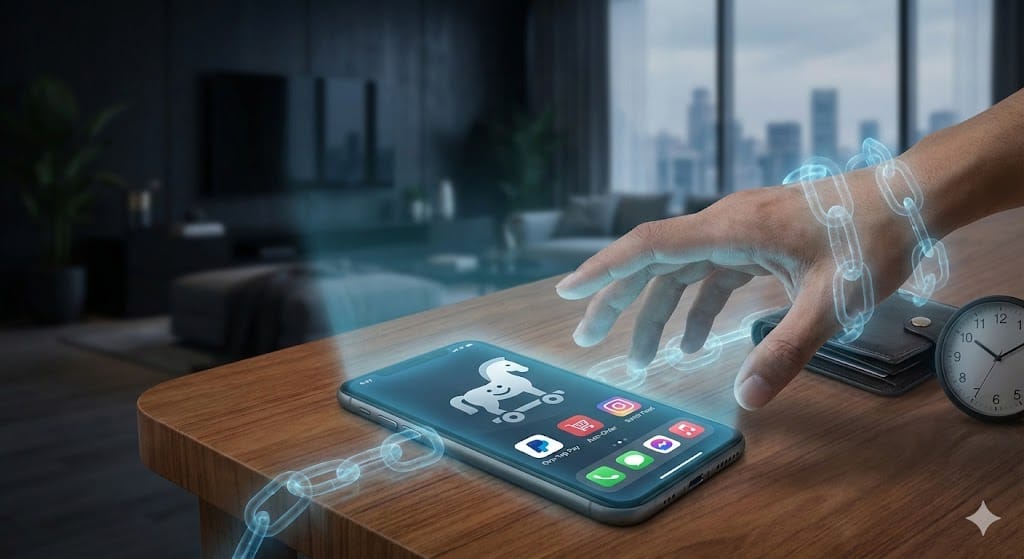
Every modern promise is wrapped in one seductive idea: convenience.
One tap to pay, one swipe to order food, one fingerprint to unlock your bank account.
The more seamless the interaction, the more powerful the pull.
This looks like progress, but frictionless design carries a hidden cost.
The easier it becomes to move through digital systems, the more control you quietly hand over.
Convenience has become the most effective Trojan horse in the digital age.
Below is the real story of how apps engineer your behavior, guide your choices, and extract the kind of data that once required warrants and investigations.
Frictionless Design: Your Autonomy Gets Sanded Down
Friction is what gives you time to think. Remove friction and you remove reflection. Modern apps work relentlessly to collapse every point of hesitation.
Examples include:
• Auto ordering and auto renewing
• One tap checkout
• Autoplay and infinite scroll
• Predictive prompts that decide for you
Each of these removes a small moment where you might have asked a question:
Do I actually want this?
Should I be spending this?
Is this good for me?
When those moments of conscious choice disappear, algorithms fill the gap. You stop acting and start reacting. Systems begin to shape your decisions in the background and you barely notice the shift.
Buy & Sell Bitcoin, Dollar Cost Average management abd pay your bills with Bitcoin on the the best Bitcoin only Exchange.
Data Extraction: Convenience Is the Bait
Apps collect far more than the data you intentionally give them. They collect behavioral exhaust, the tiny details of how you move, browse, hesitate, and choose.
This includes:
• Microsecond level tap and scroll tracking
• Location drift and movement patterns
• Voice snippets from wake word buffering
• Purchasing rhythms
• Emotional indicators inferred through usage timing
This type of data is priceless because it reveals who you are before you know it yourself. Convenience makes this feel harmless. You accept permissions you would never agree to if they were not required to proceed. Over time, companies build high resolution profiles that predict what you will want, fear, avoid, or desire.
And the more convenient the service, the harder it becomes to disconnect. Dependency is the point.
Behavioral Steering: When Apps Decide the Direction of Your Life
Once a system understands your patterns, it can push you down specific paths. This does not feel like force. It feels like personalization.
Behavioral steering shows up in quiet nudges like:
• Order again
• People like you also bought
• Suggested for you
• Your friend just joined
• Complete your streak
These prompts are not offering choices, they are shaping them. They optimize for engagement, not your well being. They create micro incentives to keep you in loops you did not consciously choose.
Over time, the app becomes the architect of your habits. You pick up your phone without thinking, scroll without intention, and follow the next suggested step because it is the path of least resistance.
Convenience slowly rewires willpower.
The Trap: When Convenience Stops Being Optional
These systems are not content to remain optional. As more commerce, communication, travel, and identification moves into app based infrastructure, opting out becomes nearly impossible.
You now need:
• A phone to board a plane
• An app to pay for parking
• A digital ID to access services
• A smart wallet to manage your money
• A login agent to authenticate your identity
When core functions of society become digitized and centralized, you lose the ability to choose the analog path. Convenience becomes compliance. What was once optional becomes mandatory.
This is how control creeps in quietly. Not through force, but through dependency.
How To Reclaim Agency In A Frictionless World
You do not need to reject technology, but you must use it with intention. A few simple steps change the dynamic:
- Restore friction where it matters. Turn off one tap payments and auto renewals.
- Keep analog options alive. Cash, paper backups, physical keys, offline maps.
Separate identity layers. Do not let one app authenticate your entire life. - Reduce passive consumption. Remove autoplay, notifications, and feed recommendations.
- Build your own digital infrastructure where possible. Local storage, self hosted tools, privacy respecting apps.
The goal is not to escape the system, it is to stop being shaped by it.
The Real Lesson: Convenience Is Never Free
Every time something becomes easier, ask who benefits and what changes in your relationship to the tool.
Technology that saves you effort often costs you agency. When convenience becomes the default, autonomy becomes the sacrifice.
If you do not design your own digital life, someone else will design it for you.
And they will optimize it for their objectives, not yours.
Buy & Sell Bitcoin, Dollar Cost Average management abd pay your bills with Bitcoin on the the best Bitcoin only Exchange.


Comments ()