The Rise of AI-Powered Robotics: How a Desktop Arm Is Redefining Automation
We’re entering an age when artificial intelligence doesn’t just live in the cloud — it’s embodied.
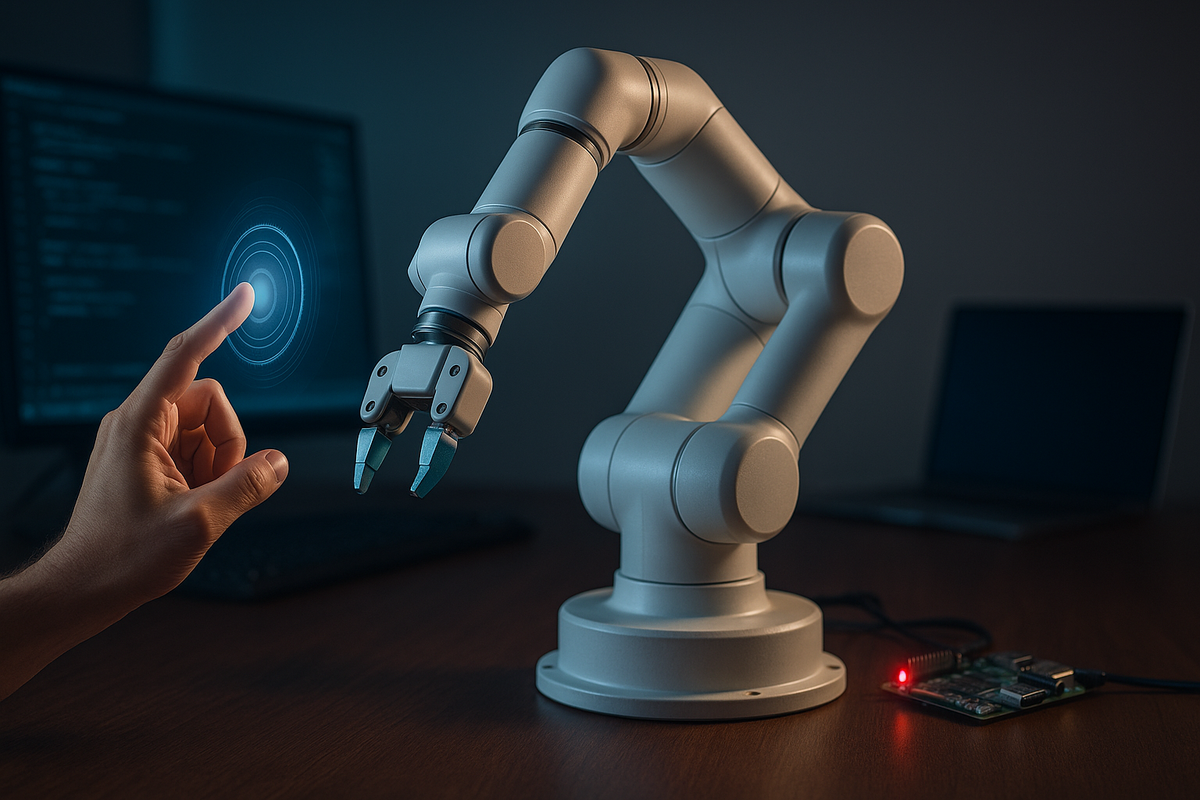
A New Era of Intelligent Machines
We’re entering an age when artificial intelligence doesn’t just live in the cloud — it’s embodied.
What once existed only in servers and chat interfaces is now taking physical form through robotics.
One striking example comes from a project circulating through open-source communities: an AI-powered robotic arm built on the Elephant Robotics myCobot platform.
It’s not an industrial machine locked behind factory gates — it’s a small, affordable, six-axis arm that runs on a Raspberry Pi and learns through large language models.
For those following the rise of self-sovereign technology, this is more than a hobbyist’s project.
It’s a glimpse of a future where intelligent, autonomous machines can live on your desk — running locally, privately, and free of corporate control.
From Factory Floors to Kitchen Tables
Until recently, robotics and automation belonged to heavy manufacturing.
But thanks to open-source hardware and rapid advances in AI, the walls are coming down.
myCobot 280 Pi, created by Elephant Robotics, brings industrial-grade motion to the desktop.
It runs Ubuntu Mate 20.04 on a Raspberry Pi 4B, eliminating the need for an external PC.
Plug in a monitor, keyboard, and mouse — and you’ve got a fully self-contained robotics workstation.
What makes this especially revolutionary is flexibility: it supports Python development, camera integration, suction-based manipulation, and full software-hardware interaction.
It’s a robotics sandbox for anyone — students, engineers, or sovereign makers — who want to build intelligent systems without cloud dependency.
The Open-Source Breakthrough: “VLM Arm”
Chinese developer Tommy Zihao launched an open-source experiment called VLM_ARM (“Vision-Language Model Arm”).
His goal: teach a robotic arm to see, understand, and act through natural-language commands.
The system links several cutting-edge tools:
- pymycobot — Python library for precise arm control
- Yi-Large — a 100 billion-parameter model from 01.AI for multimodal reasoning
- Claude 3 Opus — Anthropic’s model for visual-language tasks
- AppBuilder SDK — AI toolkit for speech recognition and NLP
Together, these components turn a small desktop robot into an embodied AI agent — one that listens, sees, thinks, and moves.
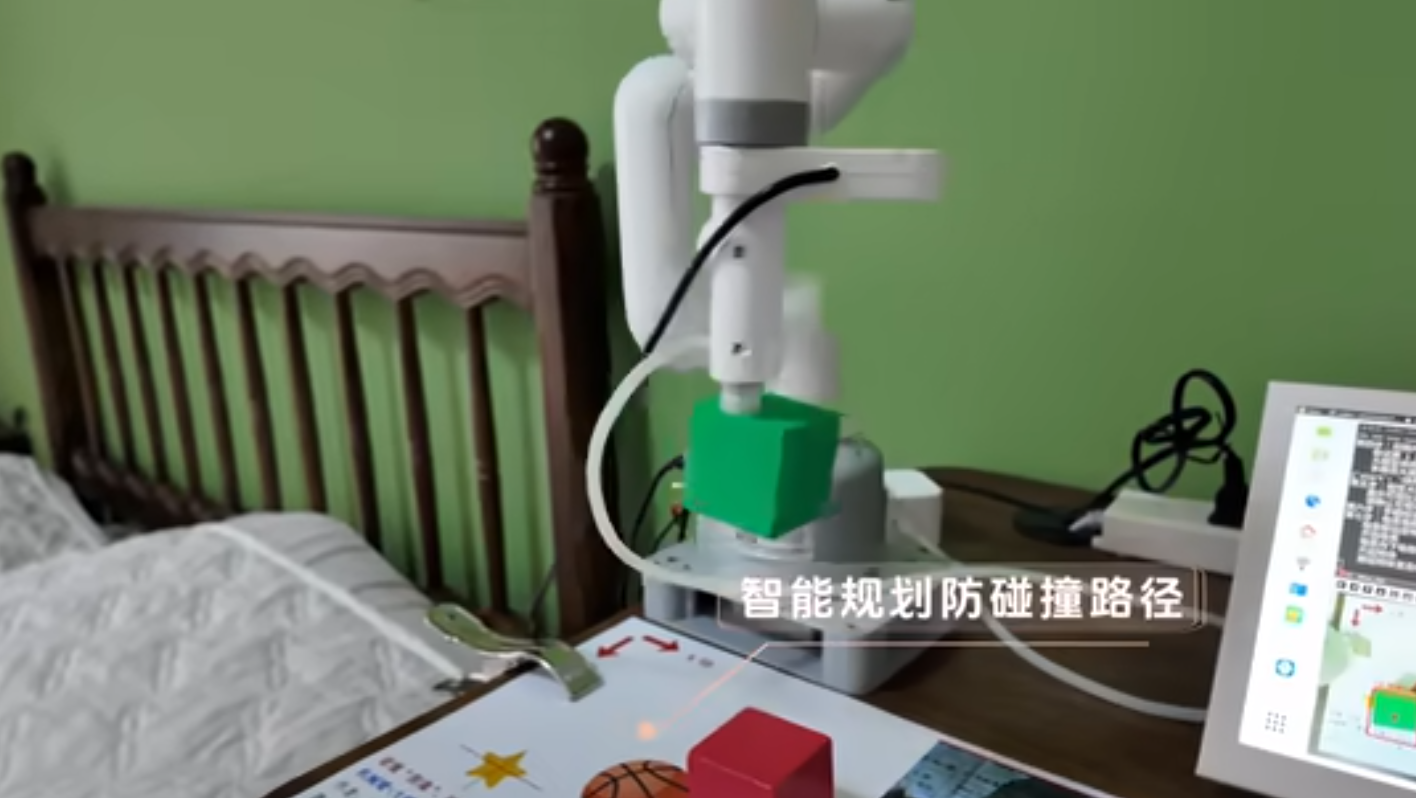
How It Works: From Voice to Action
- You speak — the onboard mic records your command.
- Speech recognition — AppBuilder SDK transcribes and parses your words.
- Language understanding — the LLM interprets intent and outputs structured instructions such as:
{"function":["back_zero()","head_dance()"],"response":"My dance moves, practiced for two and a half years"} - Vision and perception — the camera captures the workspace; OpenCV and large models identify objects, compute coordinates, and map movement.
- Embodied intelligence — the arm performs the action, aligning hearing, vision, and motion — just like a human.
Why It Matters
This project marks a paradigm shift in automation — one that intersects with On Network’s pillars of decentralization, sovereignty, and resilience.
- Local autonomy — The entire AI-robot stack can run offline on a Raspberry Pi.
- Open-source freedom — All code and schematics are public on GitHub.
- Skill multiplication — Natural-language control replaces complex programming.
- Resilient infrastructure — Autonomous local machines continue working even when cloud systems fail.
This is self-sovereign robotics — machines that serve their owners, not their manufacturers.
Toward a “Jarvis” Future
Projects like VLM Arm push robotics closer to what was once sci-fi: a personal assistant that can think, talk, and act.

While full “Jarvis” systems are still a way off, the foundations are already here — open code, affordable hardware, and models that can run locally.
The next step is integration: linking robotic arms, drones, sensors, and AI into cohesive, adaptive systems.
Imagine a home lab where your robot maintains solar panels, preps parts for 3D printing, or handles electronics — entirely offline.
Final Thoughts
The AI-powered myCobot project shows what’s possible when open-source communities, independent developers, and AI innovation converge.
It’s not just about automation — it’s about empowerment.
Every revolution starts small. Today it’s a six-axis arm on a desk. Tomorrow it’s a self-running workshop.
As the world grows less stable, local AI-robotic systems will become essential tools for human independence.
Sources


Comments ()